
 Facebook
 X
X
 Pinterest
 Copy Link

Smooth Closings: Buyer Out #20 — The HOA/POA Addendum Buyers and Sellers Should Understand
When people think about a real estate contract, they often focus on the big things: price, financing, inspections, appraisal, and closing date. But sometimes the smaller addenda can make a big difference in whether a transaction moves smoothly to closing — or gives a buyer another opportunity to terminate.
That is why this topic is part of my Smooth Closings: 44 Buyer Outs in the Texas Real Estate Contract series.
Today’s topic is Buyer Out #20: Addendum for Property Subject to Mandatory Membership in a Property Owners Association, commonly referred to as an HOA or POA addendum.
This addendum is used when a property is subject to mandatory membership in a property owners association. In simple terms, if the buyer is required to be part of an HOA or POA after purchasing the property, the buyer needs access to certain association information before closing. TREC describes this addendum as the form used when required membership in a property owners association is tied to the property, and it allows the buyer to choose whether or not to receive information about the association. It is not used for condominiums.
Why does this matter?
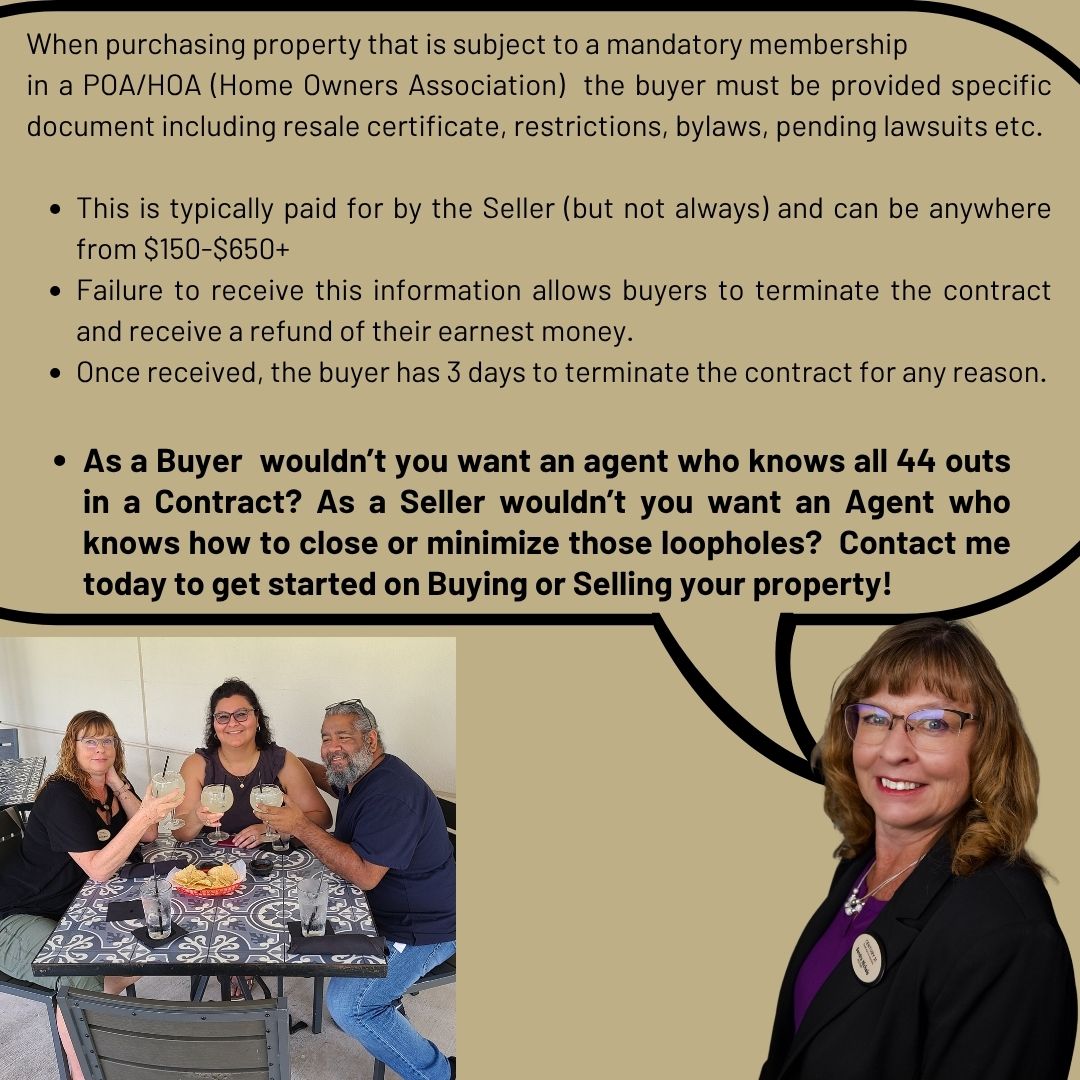
Because HOA and POA documents can affect how a buyer feels about the property. These documents may include restrictions, bylaws, rules, resale certificates, dues, transfer fees, pending lawsuits, violations, assessments, and other important details about the association.
For buyers, this information matters because they need to understand what they are agreeing to before they own the home. Are there rules about fencing, exterior paint colors, short-term rentals, parking, landscaping, pets, sheds, or future improvements? Are there fees due at closing? Are there violations that need to be resolved? Are there special assessments or pending issues with the association?
For sellers, this matters because delays in ordering or delivering the required HOA/POA information can create problems in the transaction.
Under the current TREC POA addendum, when the seller is responsible for delivering the subdivision information, the buyer may terminate within three days after receiving it, or before closing, whichever occurs first. If the buyer does not receive the required subdivision information, the buyer may be able to terminate prior to closing and receive a refund of the earnest money.
That is why this can become a “buyer out.”
It may not be the first thing people think about when writing or accepting an offer, but it can absolutely affect the strength and timing of a contract. A buyer may love the home, but after reviewing the HOA documents, they may discover restrictions, fees, or rules that change their mind. A seller may think everything is moving along smoothly, but if the documents are not provided correctly or on time, it can create an unexpected opening for the buyer to terminate.
This is also why I like to talk about these details early.
If you are selling a home in an HOA or POA, it is a good idea to know who manages the association, what documents may be required, what the current fees are, whether there are any violations, and how long it usually takes to receive the resale certificate or subdivision information. Preparing early can help reduce delays once you are under contract.
If you are buying a home in an HOA or POA, do not treat the association documents as just another stack of paperwork. Take the time to review the rules, fees, restrictions, and any information that could affect how you plan to use and enjoy the property.
The goal is not to scare anyone away from HOA or POA communities. Many buyers love them because they can help maintain community standards, amenities, and neighborhood consistency. The goal is to make sure everyone understands the details before getting too far into the transaction.
That is what smooth closings are really about: fewer surprises, better preparation, and knowing where the potential contract issues can appear before they become a problem.
As a buyer, wouldn’t you want an agent who understands the possible outs in the contract?
As a seller, wouldn’t you want an agent who knows how to help reduce delays, minimize surprises, and keep the transaction moving toward closing?
If you are thinking about buying or selling in San Marcos, Kissing Tree, New Braunfels, Kyle, Wimberley, Canyon Lake, Seguin, or the surrounding Central Texas area, I would be happy to help you understand the process and prepare for a smoother transaction.
Sandra Nichols, REALTOR®
Century 21 Randall Morris & Associates
Helping buyers and sellers prepare for smoother closings in Central Texas.
This blog is for general educational purposes only and is not legal advice. For legal questions about a contract or specific transaction, always consult a qualified real estate attorney.


